Welcome to RecycleMate
Your ultimate resource for learning about proper recycling practices and sustainable waste management. Explore our recycling guides or chat with our AI assistant to get instant answers to your recycling questions.
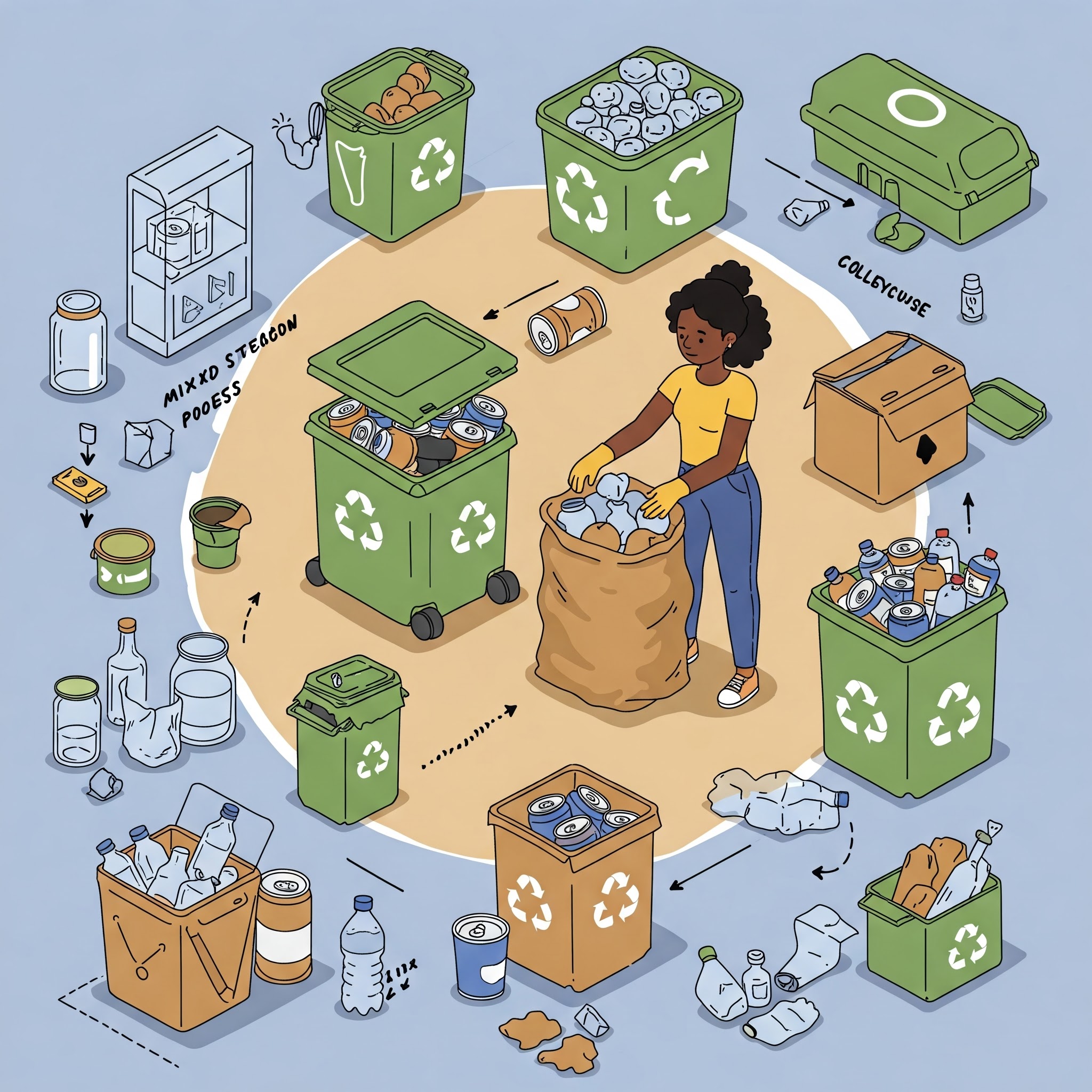
Plastic Recycling Guide
Plastic recycling is crucial for reducing pollution and conserving resources. Different types of plastic require different recycling methods. Here's what you need to know:
#1 PET (Polyethylene Terephthalate)
Used in: Water bottles, soda bottles, food containers
Recyclable: ✓ Widely accepted
Tips: Remove caps, rinse, and flatten
#2 HDPE (High-Density Polyethylene)
Used in: Milk jugs, detergent bottles, shampoo bottles
Recyclable: ✓ Widely accepted
Tips: Rinse thoroughly to remove residue
#3 PVC (Polyvinyl Chloride)
Used in: Pipes, window frames, wire insulation
Recyclable: ✗ Limited acceptance
Tips: Check with local facilities
#4 LDPE (Low-Density Polyethylene)
Used in: Plastic bags, squeeze bottles, food wrap
Recyclable: ✓ At special collection points
Tips: Return bags to grocery store collection points
#5 PP (Polypropylene)
Used in: Yogurt containers, medicine bottles, straws
Recyclable: ✓ Increasingly accepted
Tips: Check local guidelines
#6 PS (Polystyrene)
Used in: Foam cups, takeout containers, packing peanuts
Recyclable: ✗ Rarely accepted
Tips: Look for specialized recycling programs
#7 Other
Used in: Various products including bioplastics
Recyclable: ✗ Varies widely
Tips: Check manufacturer guidelines
General Plastic Recycling Tips:
- Always clean and dry plastic containers before recycling
- Remove all non-plastic components (labels are usually OK)
- Check with your local recycling program about accepted plastics
- Consider reducing plastic use with reusable alternatives
Paper & Cardboard Recycling
Paper is one of the most successfully recycled materials, with recycling rates over 60% in many countries. Proper paper recycling can save trees, water, and energy.
Cardboard Boxes
Recyclable: ✓ Highly recyclable
Tips: Remove tape, flatten boxes, keep dry
Newspapers & Magazines
Recyclable: ✓ Easily recycled
Tips: Remove plastic wrapping, keep clean
Office Paper
Recyclable: ✓ Highly recyclable
Tips: Remove staples, paper clips and plastic folders
Food-Contaminated Paper
Recyclable: ✗ Not recyclable
Tips: Pizza boxes with grease stains should be composted
Paper Recycling Tips:
- Keep paper dry and clean - contaminated paper reduces recyclability
- Remove any non-paper attachments like plastic windows in envelopes
- Shredded paper can sometimes be recycled but check local guidelines
- Paper with foil or plastic coating (like some gift wrap) often cannot be recycled
Glass Recycling
Glass is 100% recyclable and can be recycled endlessly without loss in quality or purity. Recycling glass reduces consumption of raw materials, extends the life of equipment, and saves energy.
Food Jars & Bottles
Recyclable: ✓ Highly recyclable
Tips: Rinse thoroughly, remove lids and corks
Colored Glass
Recyclable: ✓ Recyclable but sometimes separated
Tips: Some programs require separation by color
Window Glass
Recyclable: ✗ Not usually recyclable in standard programs
Tips: Requires specialized recycling
Drinking Glasses & Cookware
Recyclable: ✗ Not recyclable in standard programs
Tips: Different melting point than container glass
Glass Recycling Tips:
- Always rinse glass containers to remove food residue
- No need to remove labels - they burn off during recycling
- Keep different colored glass separate if your program requires it
- Don't include non-container glass like lightbulbs or mirrors
Metal Recycling
Metals are valuable recyclable materials that can be recycled indefinitely without degrading their properties. Recycling metal saves significant energy compared to mining and refining new metal.
Aluminum Cans
Recyclable: ✓ Highly recyclable and valuable
Tips: Rinse and crush to save space
Steel Food Cans
Recyclable: ✓ Widely accepted
Tips: Rinse thoroughly, labels can stay on
Aluminum Foil & Trays
Recyclable: ✓ Recyclable if clean
Tips: Make sure it's clean and balled up
Scrap Metal
Recyclable: ✓ Valuable for recycling
Tips: Take to specialized centers or scrap yards
Metal Recycling Tips:
- Use a magnet to distinguish between ferrous (magnetic) and non-ferrous metals
- Large metal items should be taken to specialized recycling centers
- Check if aerosol cans need to be empty before recycling
- Metal bottle caps can often be recycled with other metal items
Electronics Recycling
Electronic waste (e-waste) contains valuable materials as well as hazardous components. Proper recycling prevents toxic elements from harming the environment while recovering useful materials.
Computers & Laptops
Recyclable: ✓ Through specialized e-waste recycling
Tips: Wipe data before recycling
Mobile Phones
Recyclable: ✓ High value for recycling
Tips: Many retailers offer take-back programs
Batteries
Recyclable: ✓ Must be recycled properly
Tips: Never throw in regular trash; use specialized collection points
Large Appliances
Recyclable: ✓ Through specific programs
Tips: Retailers often provide recycling when delivering new appliances
E-Waste Recycling Tips:
- Never dispose of electronics in regular trash
- Look for electronics recycling events in your community
- Some manufacturers and retailers offer take-back programs
- Consider donating working electronics to extend their useful life
- Be sure to erase personal data before recycling or donating